Overview
The targeted revision of the Waste Framework Directive is Directive (EU) 2025/1892. It introduces EU-wide rules for textile and footwear EPR and binding food-waste reduction targets.
The directive entered into force on 16 October 2025. Member States must transpose it by 17 June 2027 and establish operational textile EPR schemes within 30 months of entry into force—17 April 2028, with an extra 12 months for micro-enterprises.
Producers placing clothing, footwear and related textile products on a Member State market will finance collection, sorting, reuse and recycling, with eco-modulated fees.
Sources: Directive (EU) 2025/1892; Commission Environment news (16 Oct 2025).
Key requirements
- Mandatory national EPR schemes for textiles and footwear across all EU Member States.
- Producer fees covering collection, sorting, reuse, recycling and related waste management.
- Eco-modulation of fees to reward more durable, repairable and recyclable design.
- Coverage of producers placing products on the market, including distance sellers and non-EU operators.
Who’s affected by WFD
Fashion brands, retailers, importers and other producers making textiles or footwear available on EU Member State markets, including via e-commerce. National scheme rules will define exact product lists, registration and fee mechanics.
The Role of the WFD in the Circular Economy
The new Waste Framework Directive is one of the main tools of the EU Strategy on Circular Economy. Its major aim is to prevent the generation of waste and to promote the efficient recovery and utilization of waste by cycling products through reuse and recycling. Key contributions of the WFD to the circular economy include:
- Promoting Material Circularity: The directive encourages manufacturers to recycle waste by using them as raw materials to produce other goods in a bid to cut on the use of virgin materials.
- Encouraging Waste Prevention: They will ensure that waste prevention measures are implemented by the WFD, engaging businesses in practices such as the durability and repairability of products they develop.
- Enhancing Recycling Rates: It increases the amount of recycled items and respects the level and indicators of recycling rates fixed by the directive. For instance, textiles have to provide higher thresholds regarding recycling to avoid the unnecessary pollution produced by the fashion industry.
- Driving Innovation: The WFD encourages the development of new technologies and practices in waste and resource management and assists industries with the transition to a circular economy.
Timeline
10 September 2025
Amending directive formally adopted.
16 October 2025
Directive (EU) 2025/1892 enters into force.
17 June 2027
Member State transposition deadline.
17 April 2028
Textile and footwear EPR schemes must be operational (micro-enterprises: 17 April 2029).
How Carbon Trail helps

Compliance Assistance
Carbon Trail assists fashion brands in navigating the complexities of the Waste Framework Directive revision. Our services encompass:
- Data Collection: We support businesses in gathering accurate waste management data.
- Reporting: Our expertise ensures that fashion brands meet their sustainability reporting obligations effectively.

Services for sustainability reporting
- Carbon Accounting: Monitor and report on carbon emissions.
- Product Life Cycle Assessment (LCA): Conduct Life Cycle Assessments to understand environmental impacts.
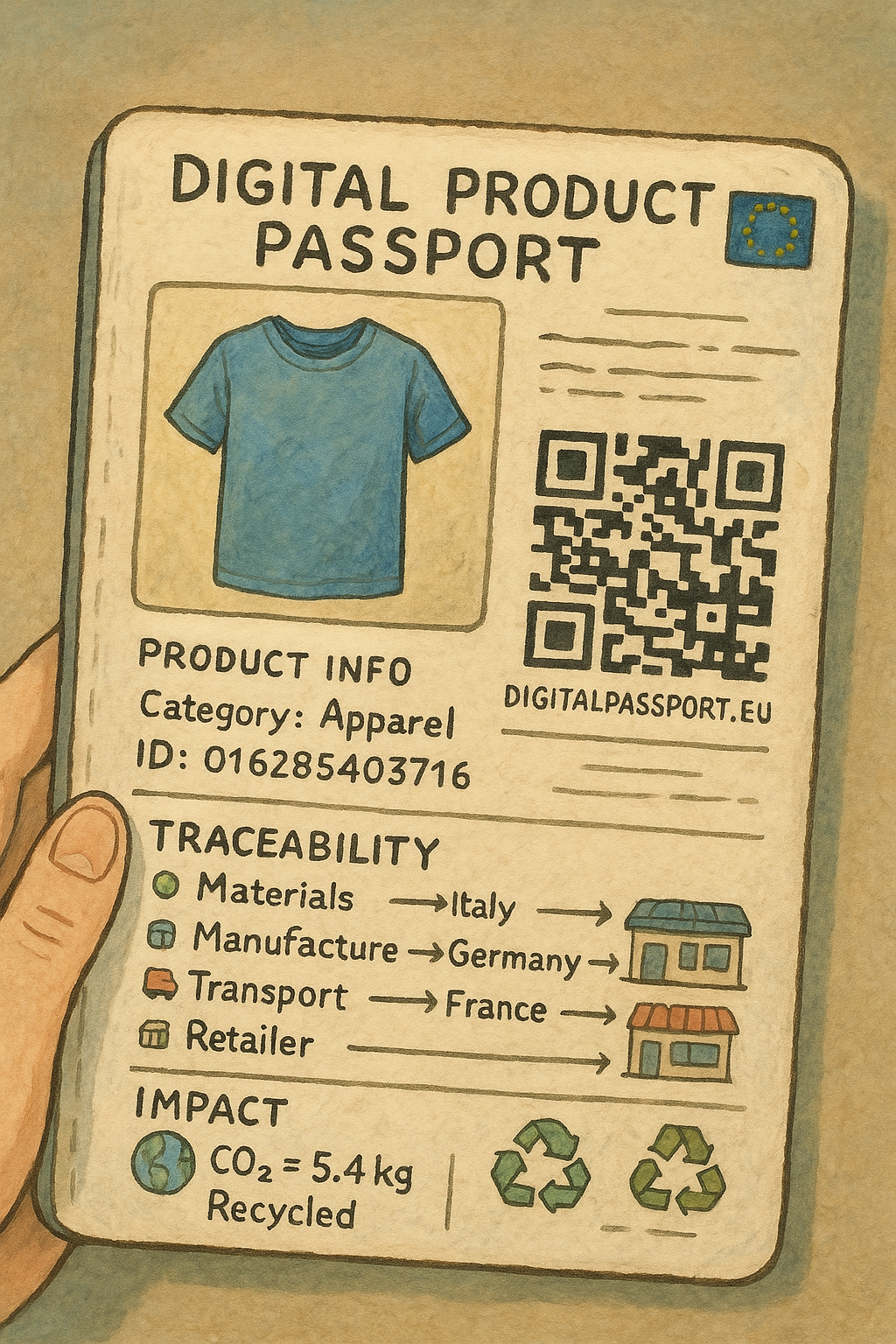
- Digital Product Passports: Develop digital tools to trace product origins and sustainability.
- Decarbonization Services: Guide brands in strategies to reduce their carbon footprint

Frequently asked questions
Is the textile EPR revision still only proposed?
No. Directive (EU) 2025/1892 is adopted and in force. National EPR schemes must be set up by April 2028.
Did reporting already start in 2024, with SMEs in 2025 and full compliance in 2027?
No. Those dates do not match the adopted directive. The correct EU-level milestones are entry into force on 16 October 2025, transposition by 17 June 2027, and operational national textile/footwear EPR schemes by 17 April 2028 (micro-enterprises: 17 April 2029).