
GHG Protocol inventory
Structure Scope 1, 2 and 3 accounting around recognized corporate and value-chain guidance.
Measure Scope 1, 2 and 3 emissions with the product, supplier and primary facility data that fashion and retail teams need to make the numbers useful.
Request a demo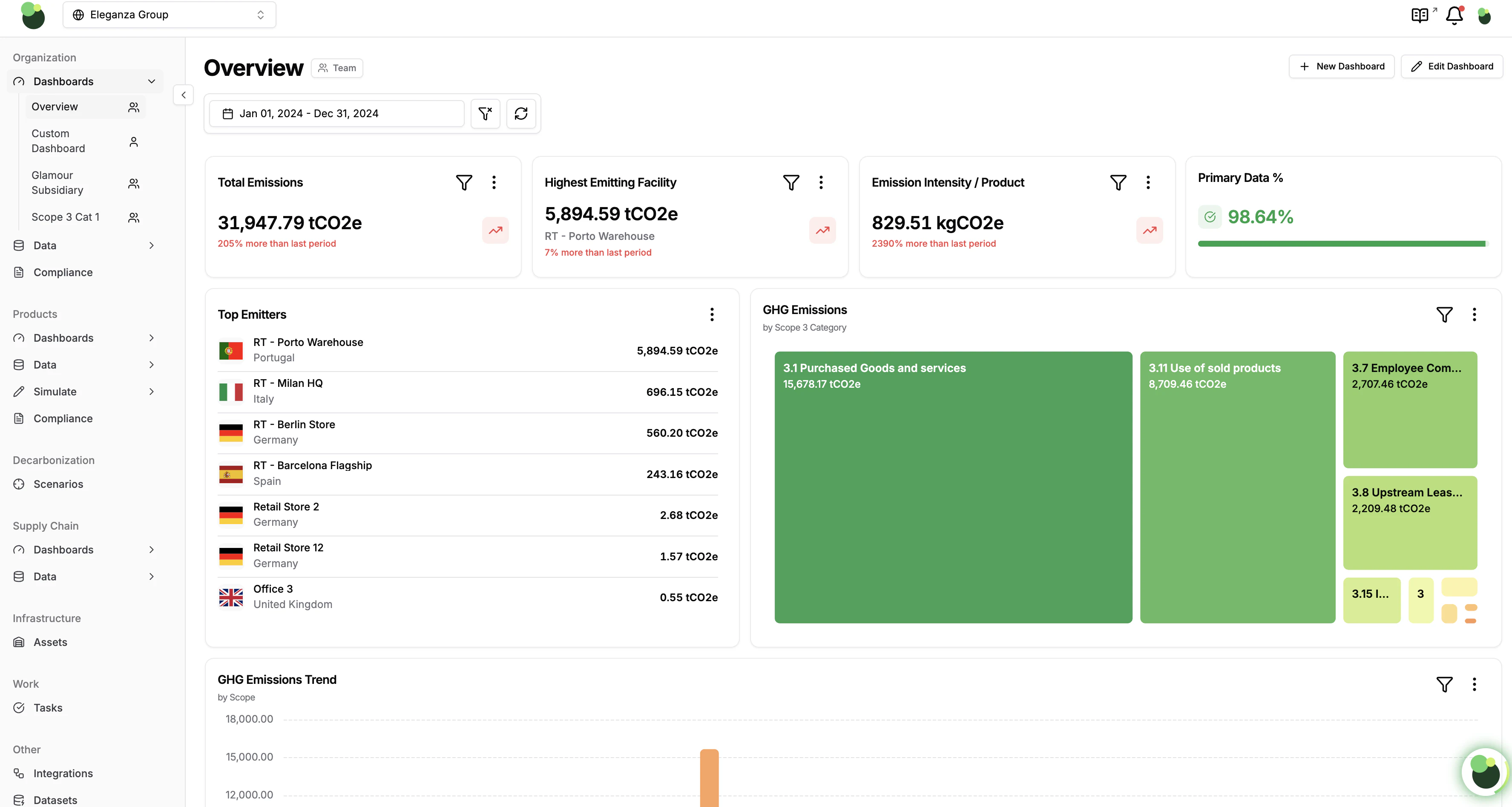
Structure Scope 1, 2 and 3 accounting around recognized corporate and value-chain guidance.
Use product LCAs to calculate purchased goods with product and supplier detail.
Track where calculations use factual evidence and where gaps still need review.
Use validated datasets and approved custom emission factors with a clear audit trail.












Bring activity data, supplier records and product footprints into one ledger. Carbon Trail maps each record to the appropriate GHG Protocol scope and accounting category while preserving its source and review status.
Calculate the Scope 3 Purchased goods and services emissions with Carbon Trail product footprints. Each footprint accounts for the product’s specific materials, fabric formation and supplier energy data at process level, then combines that result with purchase-order quantity.
Carbon Trail dashboards are custom. Choose the metrics, filters and chart types that matter to each team, subsidiary or reporting view.
Demonstration overview: Scope 3 is the largest share of emissions, led by purchased goods and services, followed by upstream transport, retail estate and business travel.
The CCF module keeps emissions totals, organizational boundaries, calculation records and supporting evidence together. Reuse that governed inventory when preparing statutory reporting and questionnaires for CSRD and ESRS E1, California SB 253 and CDP.
Carbon Trail checks whether each facility, vehicle and other activity source has submitted complete data for the selected inventory year. Missing months stay visible until the team accepts a suggested proxy or updates the record.
Apply supplier-specific and recognized factors while retaining the factor source, version and activity data needed for a transparent GHG Protocol calculation record.
Manage carbon data across subsidiaries while keeping a consolidated group inventory. Role-based access ensures that each user works only with the business units and records relevant to them.
Answers about inventory boundaries, Scope 3 calculations, emission factors, data gaps and disclosure preparation.
Yes. Carbon Trail brings Scope 1, 2 and 3 emissions into one company-level accounting workspace structured around GHG Protocol guidance, with dashboards for totals, intensity, primary-data coverage, trends and the largest sources of emissions.
Carbon Trail can use calculated product LCAs for purchased goods and services, connecting materials, manufacturing processes, supplier locations and primary facility data to the company inventory instead of relying only on broad category averages.
Yes. Teams can use supplier-specific electricity factors, Carbon Trail Product LCAs for purchase orders and sales, DEFRA factors for business travel, GLEC factors for logistics and other approved custom or validated datasets. The factor source and version remain visible in the calculation record.
Carbon Trail checks each inventory year for missing facility, vehicle and other activity data—for example, electricity missing for November and December. It can suggest a proxy using the same months from the previous year to preserve seasonality, or an average of available months. Teams can accept the proxy or update the missing activity data.
Yes. Carbon Trail supports subsidiary-level data management and role-based access so each team can work with the records relevant to them while the group retains a consolidated view.
Yes. The CCF module keeps Scope 1, 2 and 3 totals, boundaries, activity data, factors and supporting evidence together so teams can prepare emissions inputs for disclosures such as CSRD and ESRS E1, California SB 253, AASB and CDP.