Overview
The Corporate Sustainability Reporting Directive (CSRD) strengthens and standardises EU sustainability reporting through the European Sustainability Reporting Standards (ESRS), double materiality and digital tagging.
Wave 1 public-interest entities have already been reporting under the original timetable. On 18 March 2026, Omnibus I (Directive (EU) 2026/470) entered into force and materially rewrote who must report. Do not rely on pre-2026 summaries that still cite ~50,000 companies or the old “two of three” large-company tests (>250 employees / €40m turnover / €20m assets), or that still schedule a mandatory listed-SME wave.
Under the amended scope, mandatory CSRD reporting generally applies only where an undertaking exceeds both more than 1,000 employees and more than €450 million net turnover. Listed SMEs are removed from the mandatory regime. Member States must transpose the CSRD-related Omnibus changes by 19 March 2027. The Commission’s accompanying materials describe an approximate 85% reduction in the mandatory population versus the pre-Omnibus design.
Sources: Directives (EU) 2022/2464 and 2026/470; Commission CSR / Omnibus accompanying materials (~85% scope reduction).
Key requirements
- Sustainability statement prepared under ESRS, covering double materiality.
- Limited assurance by an auditor or accredited independent assurance services provider.
- Digital reporting / tagging aligned with EU requirements.
- Value-chain information, subject to Omnibus simplifications and SME protections.
- Do not treat the pre-Omnibus 250-employee / €40m / €20m criteria or listed-SME wave as current mandatory scope.
Who’s affected by CSRD
Large EU undertakings and groups meeting the Omnibus thresholds, plus certain non-EU groups with significant EU turnover and an EU subsidiary or branch. Fashion companies that reported under earlier waves but fall below the new thresholds may be exempted by Member States for financial years 2025 and 2026.
Timeline
2024–2025
Original wave 1 / early reporters publish first CSRD sustainability statements under the pre-Omnibus timetable.
18 March 2026
Omnibus I enters into force, amending CSRD scope and timelines.
19 March 2027
Member State transposition deadline for CSRD-related Omnibus amendments.
FY beginning 1 Jan 2027 / reports in 2028
First reporting cycle under the narrowed Omnibus scope for remaining in-scope companies (wave formerly described as wave 2).
How Carbon Trail helps
- At Carbon Trail, we assist fashion brands in achieving CSRD compliance by providing end-to-end support for sustainability reporting. From data collection to creating comprehensive sustainability reports, our services help fashion companies meet CSRD requirements efficiently.

Services for sustainability reporting
- Carbon Accounting: Track and report on your carbon footprint.
- Product Life Cycle Assessment (LCA): Conduct life cycle assessments of your products.
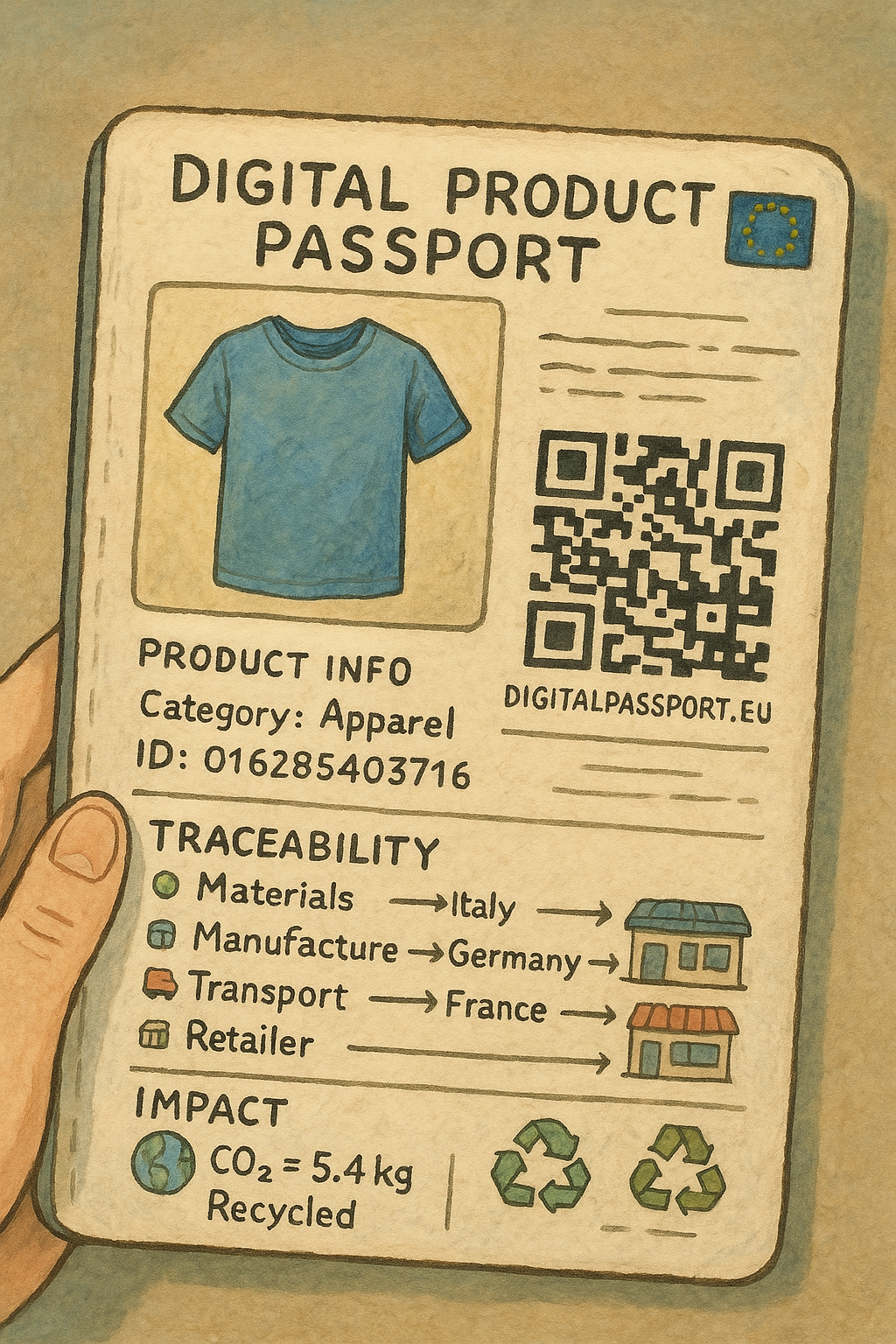
- Digital Product Passports: Ensure traceability and transparency.
- Decarbonization: Develop strategies to reduce emissions.

Frequently asked questions
Did Omnibus cancel CSRD?
No. CSRD remains in force. Omnibus I narrowed who must report and adjusted timelines, but double materiality and ESRS-based reporting continue for in-scope companies.
Are the old >250 employees / €40m turnover / €20m assets tests still the CSRD gate?
No. Those pre-Omnibus large-company tests are outdated for determining current mandatory CSRD scope. After Directive (EU) 2026/470, the core test is generally more than 1,000 employees and more than €450 million net turnover.
Are listed fashion SMEs still mandatory reporters?
No. Omnibus I removed listed SMEs from the mandatory CSRD scope.