Overview
France’s Climate and Resilience Law (Loi Climat et Résilience) authorised environmental labelling for goods. For textiles, the implementing framework is live through Decree No 2025-957 of 6 September 2025 and the related arrêté on methodology and signage.
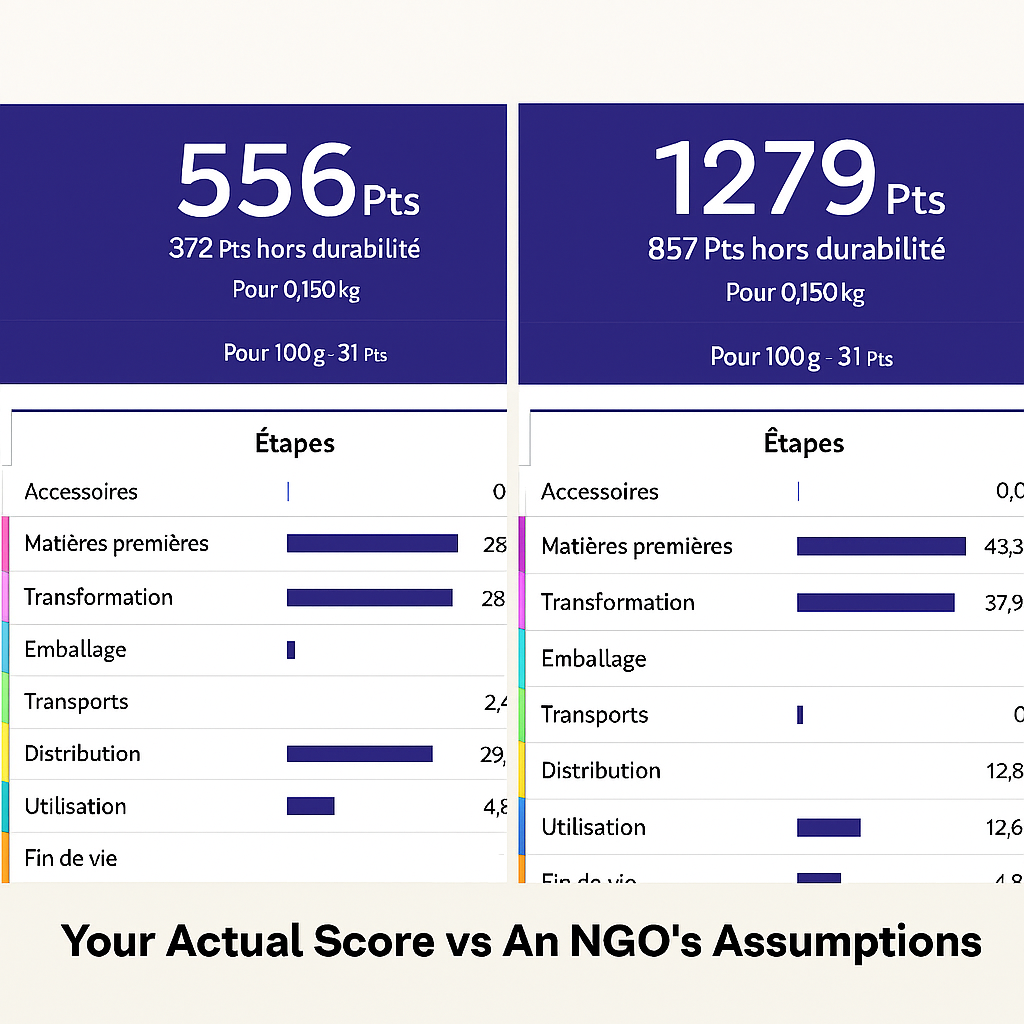
The official indicator is the product’s environmental cost (coût environnemental), calculated with the government’s Ecobalyse methodology and declared on the public portal before display. Marketing copy should not present this as a universal mandatory Eco-Score already required on every garment.
The scheme entered into force on 1 October 2025 as a voluntary framework. On 1 October 2026, transitional limits expire: third parties can publish scores without prior brand agreement, and communicating another environmental impact score without the official environmental cost becomes non-compliant. That transition is consequential, but it is still not the same as a blanket obligation for every brand to label every product.
Sources: Decree No 2025-957; French ministry press materials / Ecobalyse portal.
Key requirements
- If you display environmental cost, use the official calculation methodology and signalétique.
- Declare product data and results on the public environmental display portal before communication.
- From 1 October 2026, if you communicate another environmental score for a textile product, also display the official environmental cost.
- Administrative fines can apply for display breaches (up to €3,000 for individuals and €15,000 for legal entities under the Environmental Code).
Who’s affected
Manufacturers, importers and other persons placing clothing textiles on the French market that voluntarily calculate or communicate environmental cost, plus any person communicating environmental scores for those products. Retailers and NGOs may publish scores under the decree’s third-party rules.
December 2024 Updates
The French Eco-Score framework is at a turning point, which means it is on the way to obligatory regulation. On November 28th, the Minister of Ecological Transition opened an official public consultation, which is the last step before completing the setting of rules under the Climate and Resilience Act. As companies in the fashion and textile industries gear up for new environmental labeling requirements, this landmark is a major development.
After two years of active development, the Eco-Score framework is still under construction, although its use will be required after a trial period. First, the framework is intended to offer precise and distinct information on the environmental cost of clothing and, second, to promote responsibility in the fashion network.
Methodological Updates
Some updates to the Eco-Score framework include new guidelines to help fashion brands apply the theory and calculate their scores. Key updates include:
- Labeling Options: Brands will be able to submit environmental impacts on a per-weight basis (for example, points per kilogram) along with the total figure for each product.
- Product Range Definitions: It will be even easier to separate the product categories, with proper definitions for things like men, women and children’s ranges.
- Repair Services: Information on repair services will only include those services recognized by Refashion, the French organization that addresses textile sustainability issues.
- Traceability Requirements: Overall supply chain details should be visible to the brands, with traceability information posted on the homepage of the brand’s website as well as on the ‘TAG’ that displays public information about brands in a store.
- Year-Round Consistency: The parameters of Eco-Score modeling mustn't change throughout the year, even in sales and promotions.
- Trims and Components: Subsequent versions of the methodology will enhance the tools for trims and smaller parts, for a better estimation of environmental performance.
Timeline
6 September 2025
Decree No 2025-957 and related arrêté published.
1 October 2025
Voluntary environmental cost display regime enters into force.
1 October 2026
Third-party publication without brand consent allowed; coherence duty expands where other environmental scores are used.
How Carbon Trail helps

Compliance Assistance
- Carbon Trail helps fashion brands meet the reporting and disclosure requirements of the French Loi Climat by guiding them through the data collection, product life cycle analysis, and Eco-Score calculation processes. Our platform simplifies the complex environmental assessments necessary to comply with the law.

Services for sustainability reporting
- Carbon Accounting: Accurately track emissions data for each stage of the product lifecycle to calculate the Eco-Score.
- Product Life Cycle Assessment (LCA): Assess environmental impacts from raw materials to end-of-life disposal.
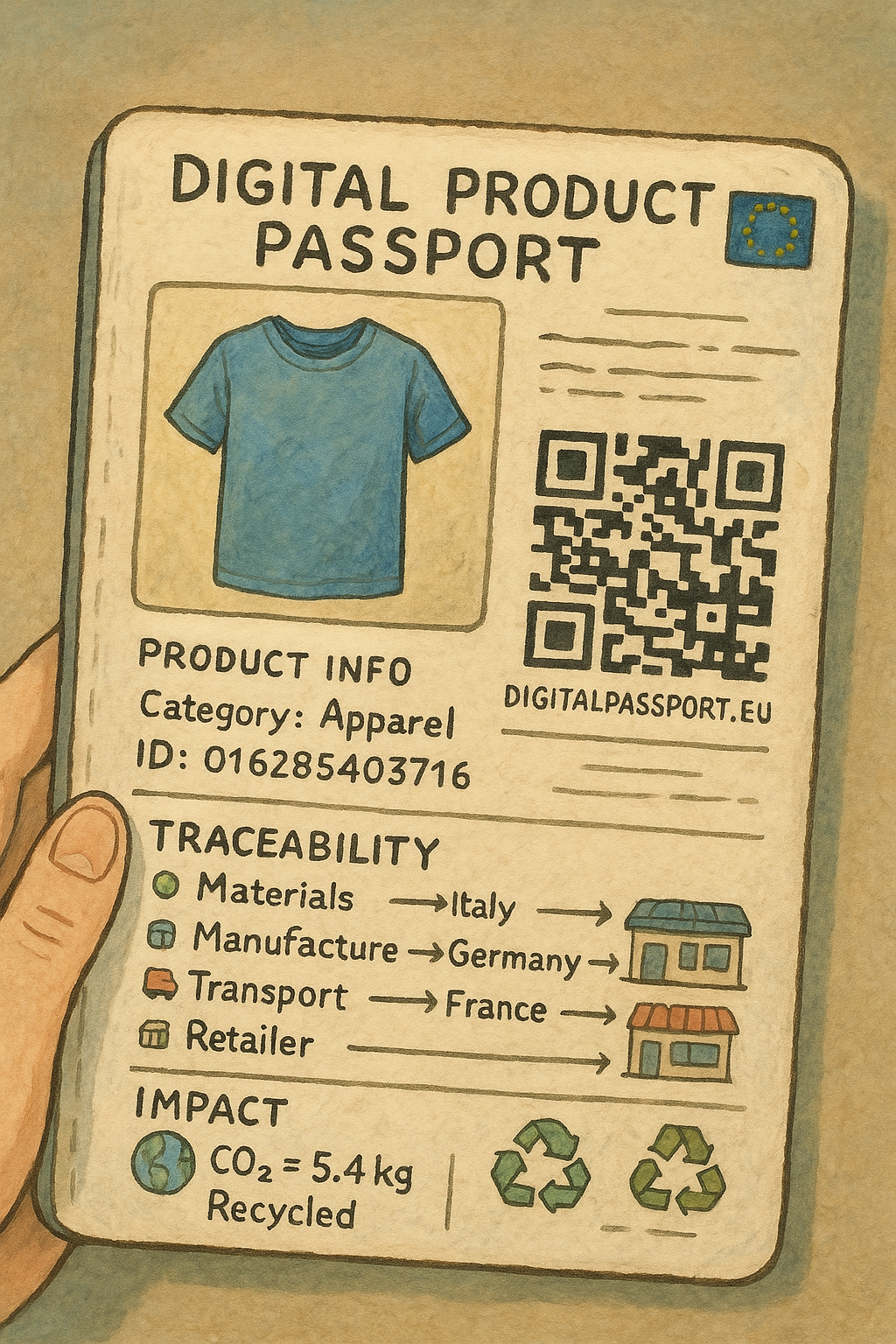
- Digital Product Passports: Ensure that all product information, including sustainability credentials, is available to consumers.
- Decarbonization Services: Help fashion brands create strategies to lower their environmental impact and improve their Eco-Score.

Frequently asked questions
Must every brand publish a textile Eco-Score today?
No. The current French regime is a voluntary environmental cost (coût environnemental) display framework. From 1 October 2026 the rules become more consequential for third-party publication and for brands that already communicate other environmental scores, but that is not a blanket mandatory label on every product.