Overview
The Ecodesign for Sustainable Products Regulation (ESPR) is Regulation (EU) 2024/1781. It replaces the previous Ecodesign Directive framework with a broader regime covering almost all physical products placed on the EU market, including textiles.
ESPR entered into force on 18 July 2024. It is not still awaiting adoption, and it does not by itself force every fashion product to meet final ecodesign criteria or carry a textile DPP today. Product-group rules arrive through delegated acts under the Commission working plan.
The Ecodesign for Sustainable Products and Energy Labelling Working Plan 2025–2030 prioritises textiles/apparel. Commission DPP guidance currently indicates Q4 2027 as the planned adoption window for the textiles delegated act; concrete DPP data fields and application dates will be set in that act and follow-on measures. Near-term fashion-relevant duties already live include rules on destruction of unsold consumer products (apparel and footwear), with large-company application from mid-2026.
Sources: Regulation (EU) 2024/1781; Commission ESPR working plan 2025–2030; Commission textile apparel DPP page (indicative Q4 2027).
Key requirements
Framework obligations already live
- Horizontal ESPR framework in force since 18 July 2024 — status is adopted / in force, not “in review”.
- Rules on destruction of unsold consumer products, with apparel and footwear among the priority categories.
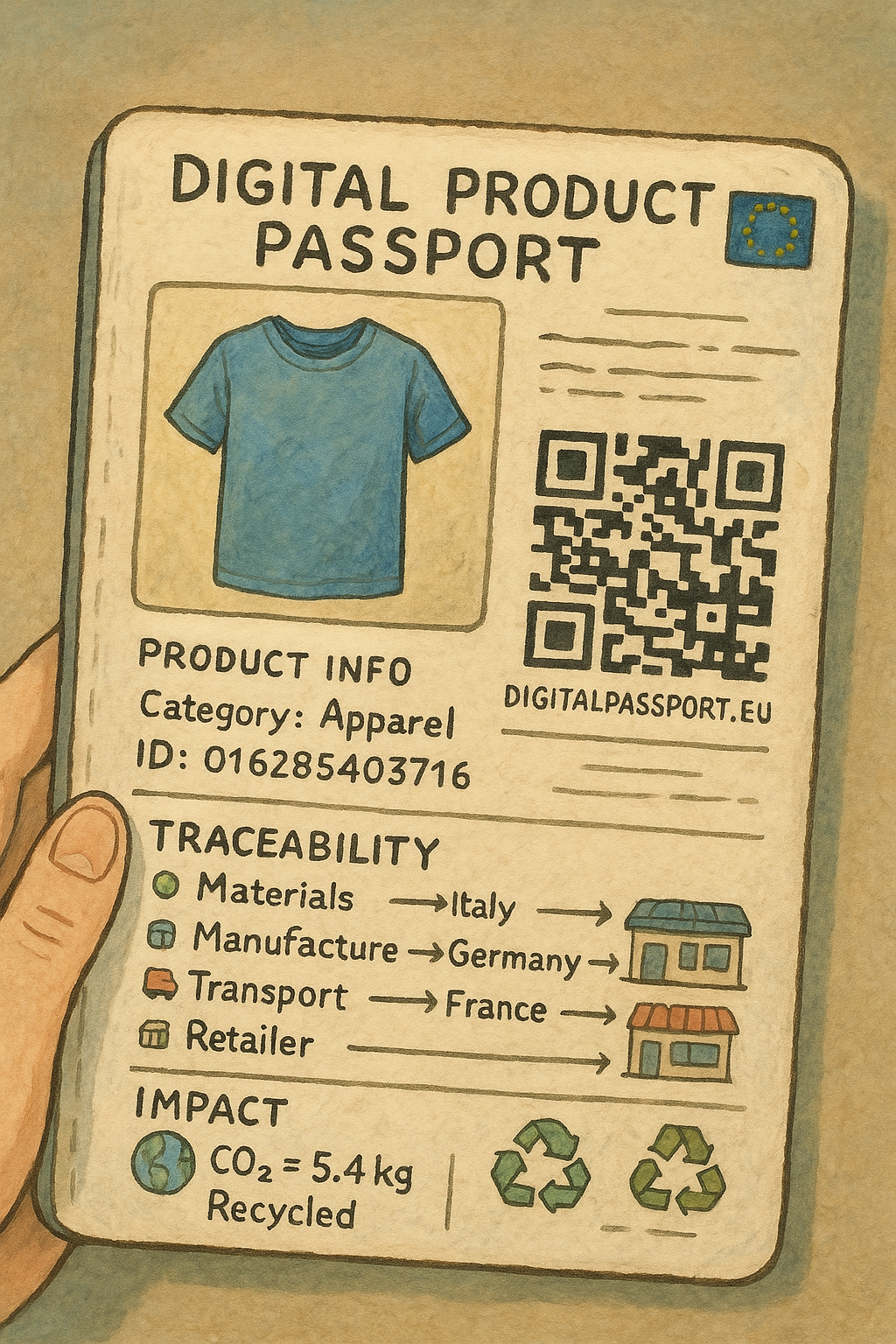
- Horizontal Digital Product Passport architecture and registry arrangements being prepared for use by product-specific acts.
Textile-specific next steps
- Commission working plan 2025–2030 lists textiles/apparel as a priority product group.
- Indicative Commission target: textiles delegated act adoption in Q4 2027 (timelines may shift).
- Detailed textile performance, information and DPP data requirements will be set in that delegated act — not in ESPR itself.
- Avoid categorical claims that brands must already run full LCAs for every SKU or that “all fashion products” must meet final ecodesign criteria by 2028.
Who’s affected by ESPR
Manufacturers, importers, distributors and dealers placing products on the EU market, including fashion brands and retailers. Large companies face earlier unsold-destruction obligations; broader textile ecodesign and DPP duties will apply only once the textiles delegated act and related measures are adopted and their application dates fall due.
Transition from the Ecodesign Directive to ESPR
The ESPR adds to the existing Ecodesign Directive that has only previously covered energy-efficient products and the current legislation widens the range of goods within its scope, such as textiles and fashion. The first of these changes is to move sustainability from the implementation phase to the design phase of all products sold in the EU.
Key differences between the Ecodesign Directive and the ESPR include:
- Expanded Scope: Previous legislation included the Ecodesign Directive but targeted only the energy efficiency of products while in the ESPR, all products are covered with major focuses on durability, reparability, recyclability, and their environmental footprint.
- Circular Economy Focus: In confronting the EU’s linear economy, the ESPR thus pursues product lifecycle assessment, material circularity, and waste minimization.
- Digital Product Passports: The regulation makes digital product passports not just optional, but required, to improve understanding within supply chains of ESG considerations.
Timeline
18 July 2024
ESPR (Regulation (EU) 2024/1781) enters into force.
2025
Commission working plan 2025–2030 prioritises textiles/apparel among other product groups.
19 July 2026
Destruction ban for unsold apparel and footwear applies to large companies (per Commission implementing measures).
Q4 2027 (indicative)
Commission’s current indicative target for adopting the ESPR textiles/apparel delegated act; DPP and ecodesign details follow from that act.
How Carbon Trail helps

Compliance Assistance
- Carbon Trail provides comprehensive support for fashion brands navigating the ESPR. We assist with data collection, analysis, and reporting to ensure compliance with sustainability standards.

Services for sustainability reporting
- Carbon Accounting: Measure and manage carbon footprints.
- Product Life Cycle Assessment (LCA): Conduct thorough life cycle assessments for products.
- Digital Product Passports: Develop digital passports to enhance product transparency.
- Decarbonization Services: Implement strategies for reducing overall carbon emissions in operations.

Frequently asked questions
Is ESPR still “in review”?
No. The framework regulation is adopted and in force since July 2024. What remains under development are product-specific delegated acts, including for textiles.
Must fashion brands already complete LCAs and DPPs for all products?
No. ESPR is a framework. Textile-specific ecodesign and DPP content requirements are expected through a delegated act with an indicative Commission target of Q4 2027; application dates will follow that act. Brands should prepare data systems, but blanket “full compliance by 2028 for every fashion product” claims overstate the current legal position.
When do textile Digital Product Passports become mandatory?
Only after the Commission adopts the textiles delegated act and related implementing measures, and those measures’ application dates arrive. ESPR creates the legal basis; it does not itself switch on a universal textile DPP tomorrow.