Overview
The Corporate Sustainability Due Diligence Directive (CSDDD / CS3D) is Directive (EU) 2024/1760. It requires in-scope companies to identify, prevent, mitigate and account for adverse human rights and environmental impacts in their own operations and chains of activities.
CSDDD entered into force on 25 July 2024. In March 2026, Omnibus I (Directive (EU) 2026/470) amended the directive: it raised thresholds, streamlined obligations and reset timelines.
After Omnibus I, the directive applies to EU companies with more than 5,000 employees and more than €1.5 billion worldwide net turnover, and to non-EU companies with more than €1.5 billion net turnover generated in the EU. Application for in-scope companies is set for 26 July 2029.
Sources: Directives (EU) 2024/1760 and 2026/470; Commission CSDDD page; EUR-Lex consolidated text.
Key requirements
- Risk-based human rights and environmental due diligence across own operations and chains of activities.
- Prevention, mitigation and remediation of adverse impacts, with complaints mechanisms and oversight.
- Annual communication / publication obligations aligned with the amended timetable (publication obligations linked to financial years from 2030 under Omnibus I).
- National supervisory enforcement once Member States transpose the amended directive.
Who’s affected by CSDDD
Only the largest EU and non-EU companies meeting the Omnibus I thresholds are directly in scope. Fashion brands below those thresholds may still face cascading contractual and information requests from in-scope customers.
Timeline
25 July 2024
Directive (EU) 2024/1760 enters into force.
18 March 2026
Omnibus I Directive (EU) 2026/470 enters into force, amending CSDDD scope and dates.
26 July 2028
Member State transposition deadline for the amended CSDDD.
26 July 2029
First application date for in-scope companies under Omnibus I.
How Carbon Trail helps

Compliance Assistance
- Carbon Trail provides comprehensive support for fashion brands navigating the complexities of the CSDDD. Our services encompass data collection, risk assessment, and the preparation of sustainability reports to ensure compliance with the directive.

Services for sustainability reporting
- Carbon Accounting: Assessing and managing carbon emissions.
- Product Life Cycle Assessment (LCA): Conducting Life Cycle Assessments to evaluate environmental impacts.
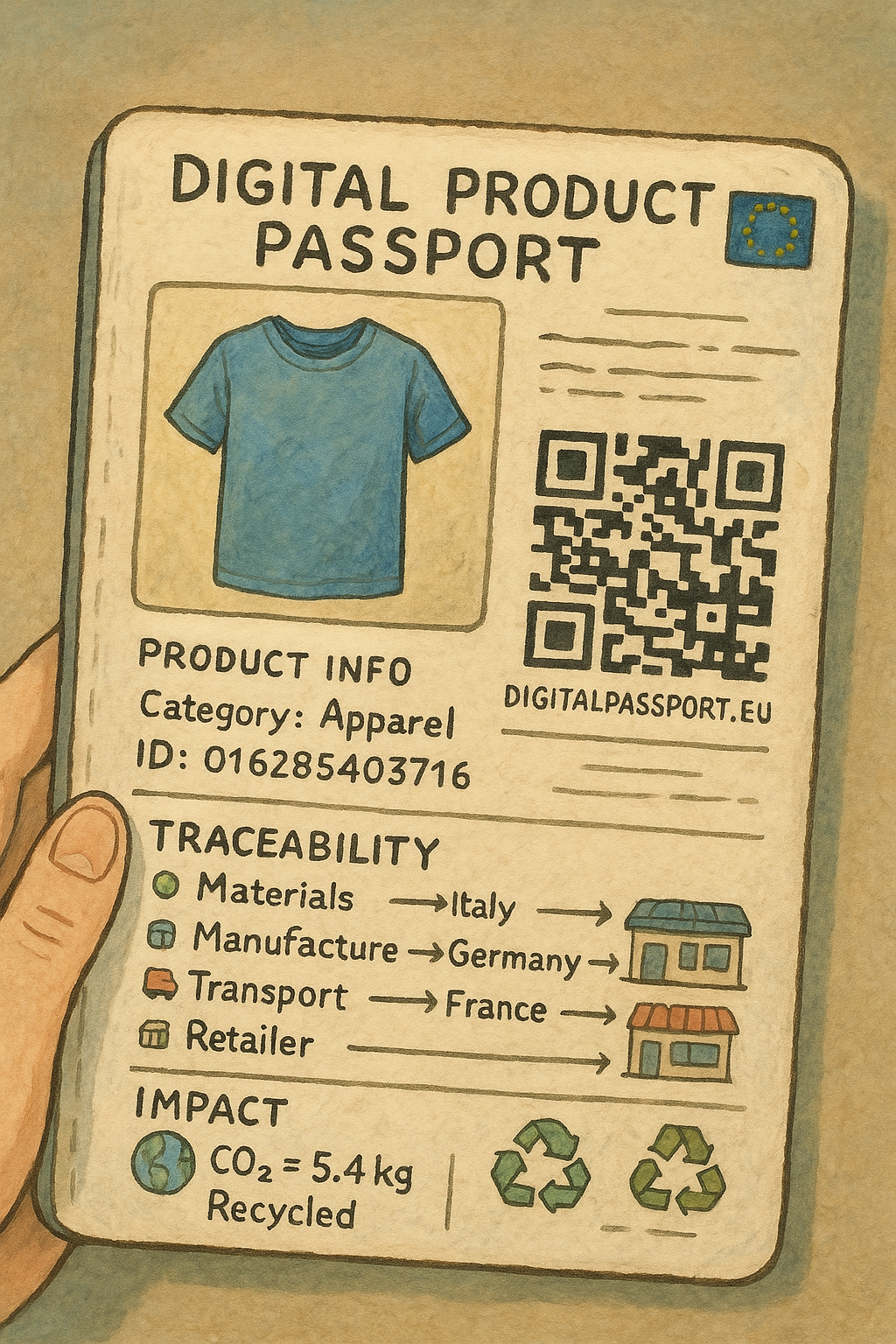
- Digital Product Passports: Creating digital records to improve product transparency.
- Decarbonization Services: Strategies and solutions for reducing carbon footprints.

Frequently asked questions
Is CSDDD still under legislative review?
The original directive is adopted. Omnibus I has also been adopted and is in force. What remains is national transposition and later company application from 2029.
Do the old >250 employees / €40m turnover or high-risk SME tests still define CSDDD scope?
No. Those earlier proposal / pre-Omnibus descriptions are obsolete. After Directive (EU) 2026/470, EU companies are generally in scope only above more than 5,000 employees and more than €1.5 billion worldwide net turnover (with parallel non-EU turnover tests).