Introduction to NFRD
Why is Non-Financial Reporting Important?
Environmental, social, and governance (ESG) areas are part of non-financial reporting and are vital for transparency and accountability. In addition to the financial report, non-financial reporting enables organizations to report on their operations, benefits, and liabilities affecting society and the earth. This reporting has become more important as consumers, investors, and regulators are interested in a company’s values and its accountability to society. For instance, climate change management or diversity shows how it handles natural resource issues including global warming or the interaction between the company and the society in the long run, hence nurturing trust and credibility.
Overview of the NFRD
The Non-Financial Reporting Directive (NFRD), which was introduced by the European Union in 2014, necessitates the reporting of non-financial information to facilitate the creation of a sustainable economy. Its objective is to make it possible for stakeholders to be informed on the ESG standards of a firm which in turn promotes responsible business practices throughout the globe.
What is the Non-Financial Reporting Directive (NFRD)?
Purpose and Scope of the NFRD
The NFRD mostly targets the major public-interest entities, including the listed companies, banks, and insurance companies with more than 500 employees. The directive intends to compel these companies to report on policies, results, and impacts and additionally risks in socially significant spheres including safe environment, social obligation, human rights, anti-corruption, and bribery. The NFRD aims at large parties in an effort to impact key economic and social players in society.
Key Requirements of the NFRD
- Environmental Matters: Each company is to disclose actions taken to address climate change. Some of the sustainability themes include emission intensity, greenhouse gas emissions, waste management and resource efficiency, use of renewable energy, and water stewardship. For example, a company may use its activities to disclose measures it has taken to reduce emissions through the implementation of specific measures.
- Social and Employee Matters: Policies relating to employees’ welfare and social accountability reporting include labor relations, health and safety, diversity, and remuneration. They could consist of matters such as health-related incentives for employees or policies to encourage employee diversity.
- Human Rights: Such disclosures should include steps taken to promote and safeguard human rights for the company and its suppliers. For example, a business might explain how it opposes child labor in factories involved in supplying the firm or guaranteeing secure working conditions.
- Anti-Corruption and Anti-Bribery: The NFRD has reporting expectations on how a company prevents corruption – this could be in the form of bribery, or money laundering among other related issues. To promote integrity, most firms have codes of ethical conduct, engage in periodic audits, and protect those who report cases of unethical practices.
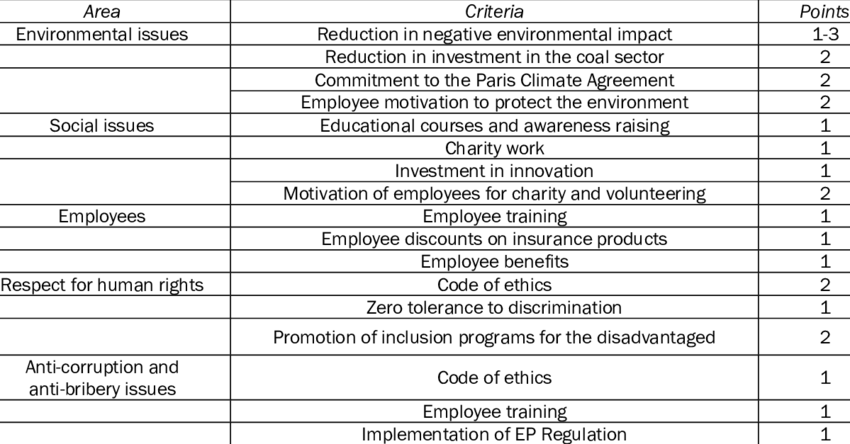
NFRD Criteria and their scoring
NFRD vs. CSRD: What’s the Difference?
Transition from NFRD to CSRD
CSRD is an upgraded version of NFRD that seeks to respond to continued calls for improved corporate sustainability reporting. In this area, the NFRD was more restrictive, ambiguous, and applied to approximately 11,000 companies. The number of entities to report under the CSRD exceeds 50,000 companies because the EU is striving to bring corporate actions closer to the European Green Deal. More specifically, the CSRD contributes to enhanced and harmonized reporting for European businesses, which may then make stakeholders more informed about those companies’ environmental and social responsibilities. To gain a more in-depth understanding, refer to our blog on CSRD.
Comparison of NFRD and CSRD Reporting Requirements
Expanded Scope Under CSRD
The NFRD targeted the identification of large public-interest enterprises with over 500 employees. The CSRD reduces this level for companies with over 250 employees, listed SMEs, and some non-EU entities operating in the internal market. For instance, a mid-technology company, that is listed on a European market venue, will become part of CSRD, prompting the inclusion of other smaller actors.
Enhanced Reporting Standards
The CSRD brings the specific industry-related European Sustainability Reporting Standards (ESRS) to eliminate disparity. This means companies have to disclose not only ESG targets but also measurable milestones like direct/emissions (scope 1, 2, 3), diversity ratios, or human rights policies. Independent verification makes sure that the reports in question meet these high standards that, in turn, add to the report’s credibility and investor’s confidence.
Increased Transparency and Digital Reporting
Digital transformation is the core concept of the CSRD. Papers should be submitted electronically and submitted to the European Single Access Point, to facilitate comparability with other companies or sectors. It assists investors, regulators, and consumers to evaluate the sustainability of organizations more efficiently creating increased pressure for corporations to compete for better sustainability evaluation.
Importance of NFRD and CSRD for Sustainable Business Practices
How NFRD/CSRD Influences Corporate ESG Strategy
The NFRD laid the groundwork for embedding ESG principles into corporate strategies. For instance, a construction company reporting its carbon footprint under NFRD might identify inefficiencies in supply chains and switch to greener materials. With CSRD, the emphasis is on forward-looking goals and measurable outcomes, pushing companies to set ambitious climate targets, such as achieving net-zero emissions by 2050. This creates a ripple effect, encouraging innovation across sectors.
Benefits for Stakeholders and Investors
Transparent ESG disclosures benefit everyone. Investors gain insight into risks and opportunities tied to climate or labor practices, helping them allocate capital responsibly. For example, a clean-energy startup with robust CSRD-compliant reporting might attract ethical investors over competitors. Consumers also make informed choices, favoring brands with solid environmental credentials. Moreover, CSRD-aligned companies can avoid fines, secure funding, and enhance their reputations, proving that sustainability isn’t just ethical, it’s profitable.
How to Comply with NFRD and Prepare for CSRD
Steps for Meeting NFRD Requirements
Identify Required Reporting Areas
According to NFRD, companies must evaluate areas, in which they operate and influence, including environmental affairs and policies, societal norms, human rights, and the company’s transparency in combating corruption. For instance, a retailer may compare its carbon footprint, supply chain sustainability, and programs on employees’ welfare. Through this analysis, there are some weaknesses and potential risks to be identified which make the company ensure that it issues relevant information to its users
Implementing Data Collection Processes
Reporting can only be accurate if accompanied by strong data collection mechanisms. Organizations have to monitor variables like energy usage, amount of waste produced, or diversity indices. For example, a food manufacturer will develop an application to track water consumption in its facilities. Thus, implementing such systems helps businesses be confident that their reports include information presented according to NFRD and recipients’ expectations.
Preparing for the Shift to CSRD
The transition to the Corporate Sustainability Reporting Directive (CSRD) demands a proactive approach.
- Expand Reporting Scope: Companies previously exempt from NFRD, such as mid-sized firms, should evaluate their ESG practices. A medium-sized logistics company, for instance, might assess its fleet’s carbon footprint anticipating CSRD requirements.
- Integrate Advanced ESG Metrics: CSRD introduces detailed reporting standards like the European Sustainability Reporting Standards (ESRS). This means tracking advanced metrics, such as supply chain emissions (scope 3) and biodiversity impacts.
- Engage Third-Party Assurance: Unlike NFRD, the CSRD mandates third-party audits for sustainability reports. Engaging auditors early can ensure compliance. For example, a tech company can partner with an assurance provider to verify its renewable energy claims.
- Train Employees and Stakeholders: Transitioning to CSRD requires cross-departmental collaboration. Conducting workshops on ESG practices can prepare teams to adapt to new requirements.
Conclusion
EU is committed to sustainability, transparency, and accountability as seen through the Non-Financial Reporting Directive (NFRD) and the transition to the Corporate Sustainability Reporting Directive (CSRD). These frameworks engage corporations to focus on ESG (Environmental, Social, and Governance) issues, enabling stakeholders to assess the non-financial risks/returns. For businesses, it is not only compliance; it becomes a new way of companies defining operations for a sustainable business. The transition from NFRD to CSRD enhances the disclosure’s range, increases the mandatory with higher standards, and includes verified reporting, which makes disclosed information more accurate and comparable. Those organizations that can act swiftly shall be in a position to boost their trust with the stakeholders, and the investors and shall also enable those companies to have a competitive advantage within the market since sustainability is seen as a virtue. Lastly, enforcing these directives is not strictly an endeavor of obeying regulations but also a business decision. Sustainability has been established as a necessity for companies since its integration enables the accomplishment of international environmental initiatives, development of ideas, and future-oriented revenues in the constantly evolving economy.