What is the Carbon Disclosure Project?
The Carbon Disclosure Project (CDP) is a non-profit organization that serves as a worldwide reporting platform for investors, businesses, cities, states, and regions to monitor their environmental footprints. Established in 2000, CDP acts as a platform for organizations to report on climate change, deforestation, and water security.
The primary objective of CDP is to promote transparency and encourage sustainable practices by providing structured and detailed datasets for stakeholders to make informed decisions. Over 23,000 companies shared their environmental performance data with CDP in 2023, highlighting US$67 trillion in market capitalization.
In climate change, the CDP plays a significant part in measuring and managing greenhouse gas emissions and climate risks. It fosters accountability and assists organizations in aligning with global climate targets, such as the Paris Agreement. CDP’s strategy that focuses on data helps transition to a low-carbon economy, underlining environmental risks and opportunities.
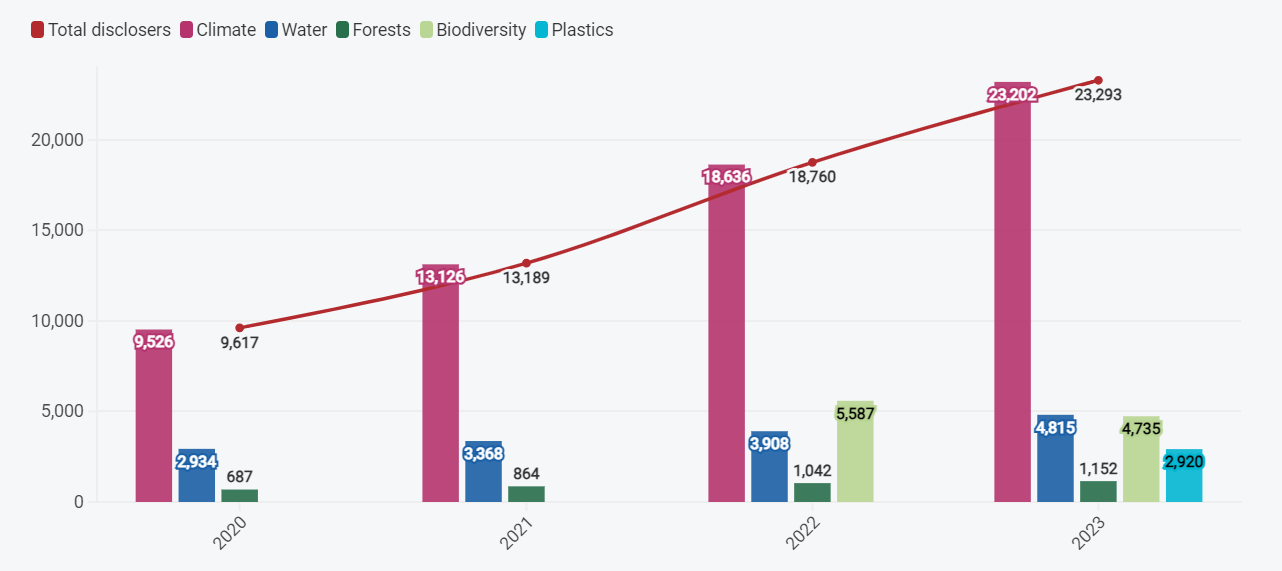
Increase in CDP Disclosures (2020-2023)
The crucial concepts of CDP include minimizing carbon footprints, sustainably managing water resources, and preventing deforestation. The CDP sends out thorough questionnaires to organizations involved, which are used to evaluate environmental practices and transparency. This assessment method helps companies to track their development and highlight areas for improvement.
Carbon Disclosure Project - Background and History
To confront the growing concerns of climate change and encourage greater transparency in corporate environmental efforts, the Carbon Disclosure Project was set up in 2000 by Paul Dickinson along with his team of environmental enthusiasts. CDP's primary objective is to reshape how businesses and governments function to establish a sustainable economy that serves both people and the planet.
Since its inception, CDP has undergone substantial growth. Earlier, the entity emphasized on gathering and distributing information on greenhouse gas emissions and climate change strategies from leading companies globally. Post that, CDP has expanded its scope to work on water security and deforestation as well, acknowledging the significance of these issues and their relevance with the emissions.
Key Milestones and Achievements of CDP
With the start of its first disclosure request in 2002 that was sent to FTSE 500 companies, CDP managed to gather a positive response from companies. This marked the beginning of a growing recognition of the importance of environmental transparency. Another notable achievement includes the expansion of CDP in 2007 including water-related data, emphasizing water scarcity and its effect on environmental sustainability.
Later on, they expanded their scope to forest-related data in 2014. They also published an annual A-List, including all the companies leading ahead in their sustainable practices and transparency. This list has become a sustainability benchmark, rewarding companies to enhance their environmental operations.
CDP has also been part of substantial collaborations, working closely with the United Nations Global Compact, the World Resources Institute, and the World Wide Fund for Nature (WWF), to align corporate reporting with global climate goals.
Impact of the Carbon Disclosure Project
CDP allows companies to follow a benchmark for their sustainability progress, by providing a standardized framework for environmental disclosure. Through CDP, companies can also identify risks and opportunities, and execute better sustainable strategies for their business. With CDP promoting transparency, it has also increased accountability among companies as well as encouraging them to set more ambitious targets.
With CDP, we have seen a shift in the attitude of companies to sustainability practices, as they realize it will not only be beneficial to the environment but also for their long-term profitability and resilience.
Additionally, the data and insights of an organization can also be used by investors, policymakers, and researchers to assess environmental performance and make informed investment decisions.
Carbon Disclosure Project Reporting Framework
The Carbon Disclosure Project (CDP) reporting framework is a detailed system designed to assist companies, cities, states, and regions disclose their environmental impacts in a standardized and comparable manner.
The CDP framework involves filling out detailed questionnaires, which are customized for corporations, cities, and governments, addressing various environmental concerns. Each area has specific sections and questions focusing on various aspects of environmental impact and management.
Key Components of CDP Disclosures
Climate Change Questionnaire
This component highlights greenhouse gas emissions, energy usage, climate-related risks, and opportunities. Companies have to report on their emission reduction targets, practices to reduce climate impacts, and progress towards achieving these goals.
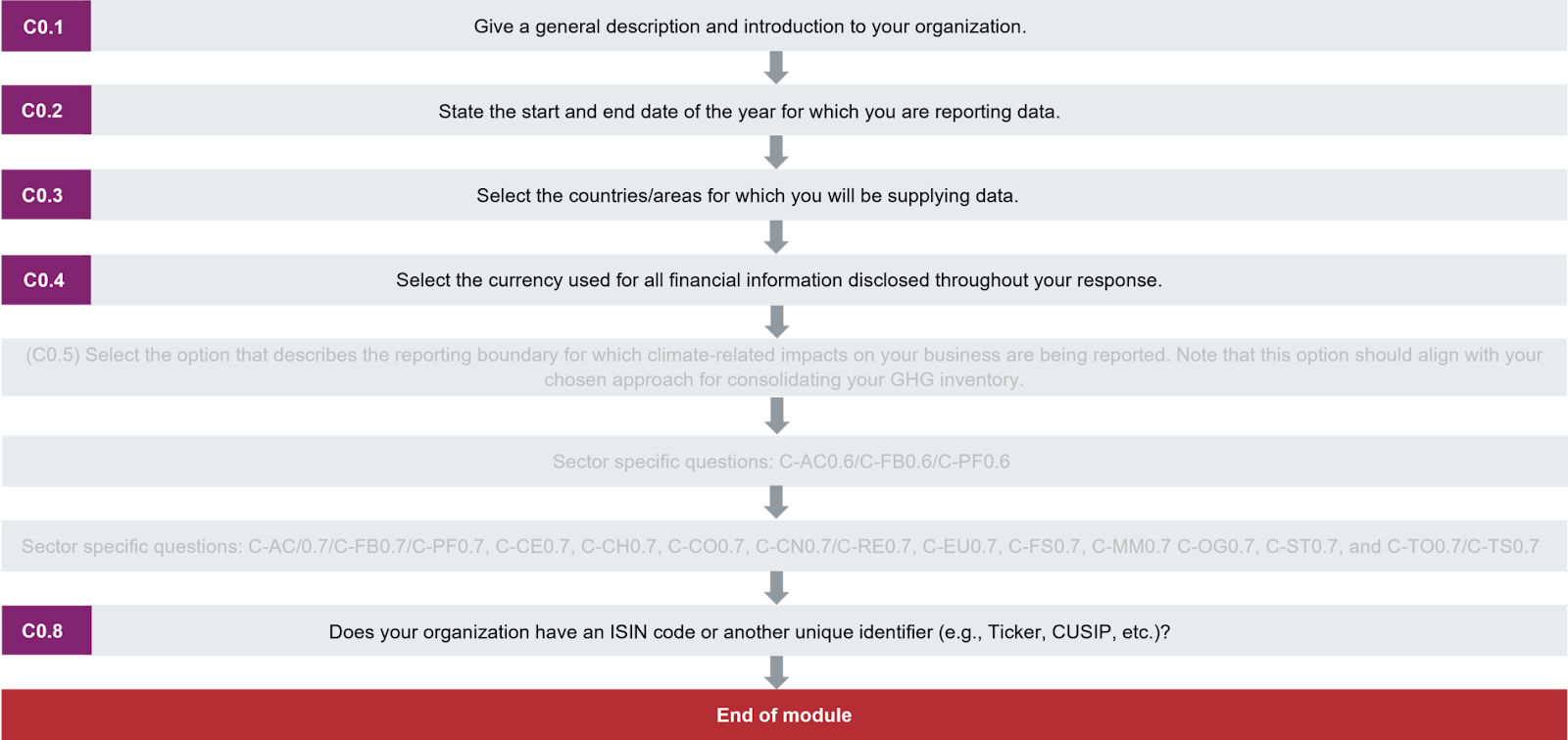
Climate Change Questionnaire
Water Security Questionnaire
This component gathers data on water-related concerns, including water consumption and management practices. Companies have to disclose the use of water resources, their impact on local water supplies, and measures taken to ensure sustainable water use.
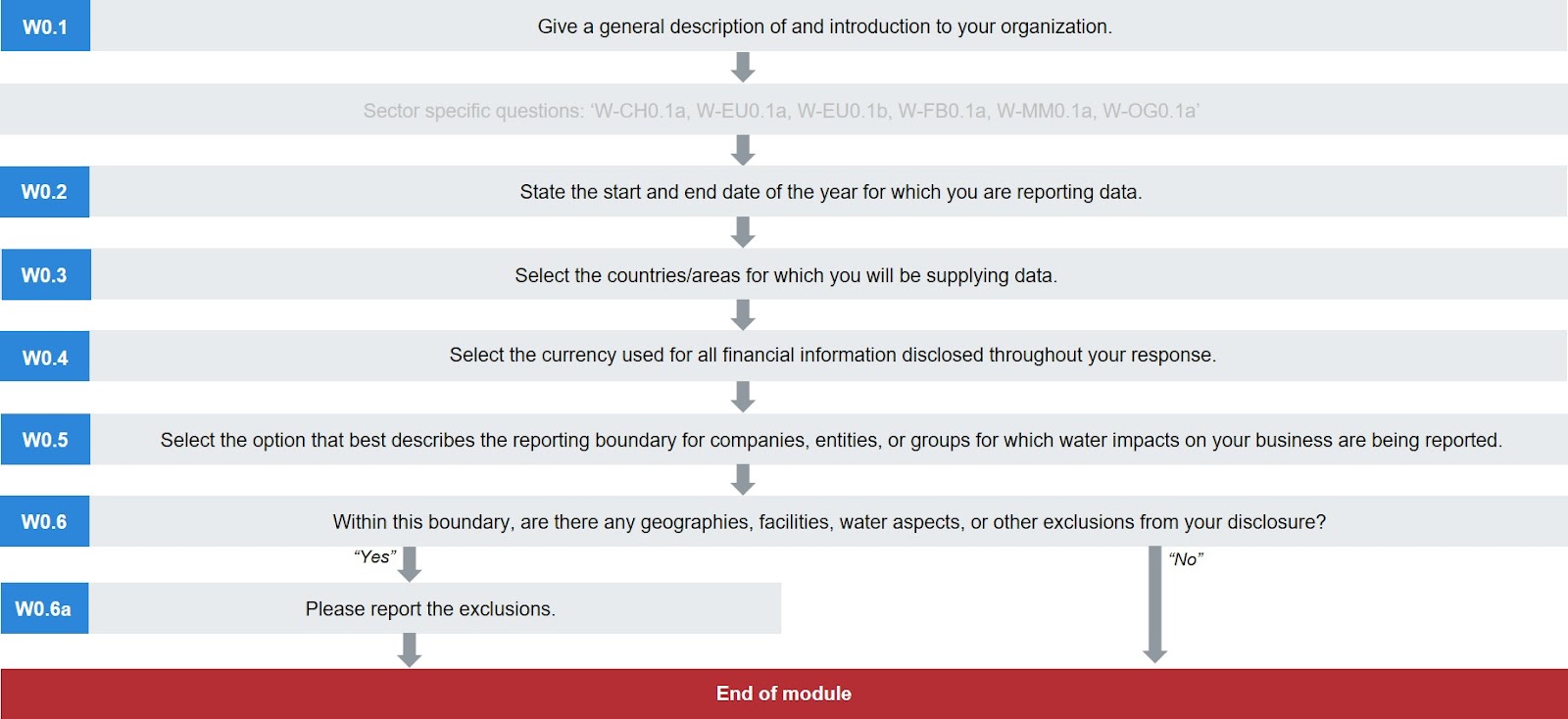
Water Security Questionnaire
Forests Questionnaire
This section focuses on deforestation and forest degradation issues. Companies need to disclose information on their sourcing of commodities like timber, palm oil, and soy, and the steps they take to combat deforestation in their supply chains.
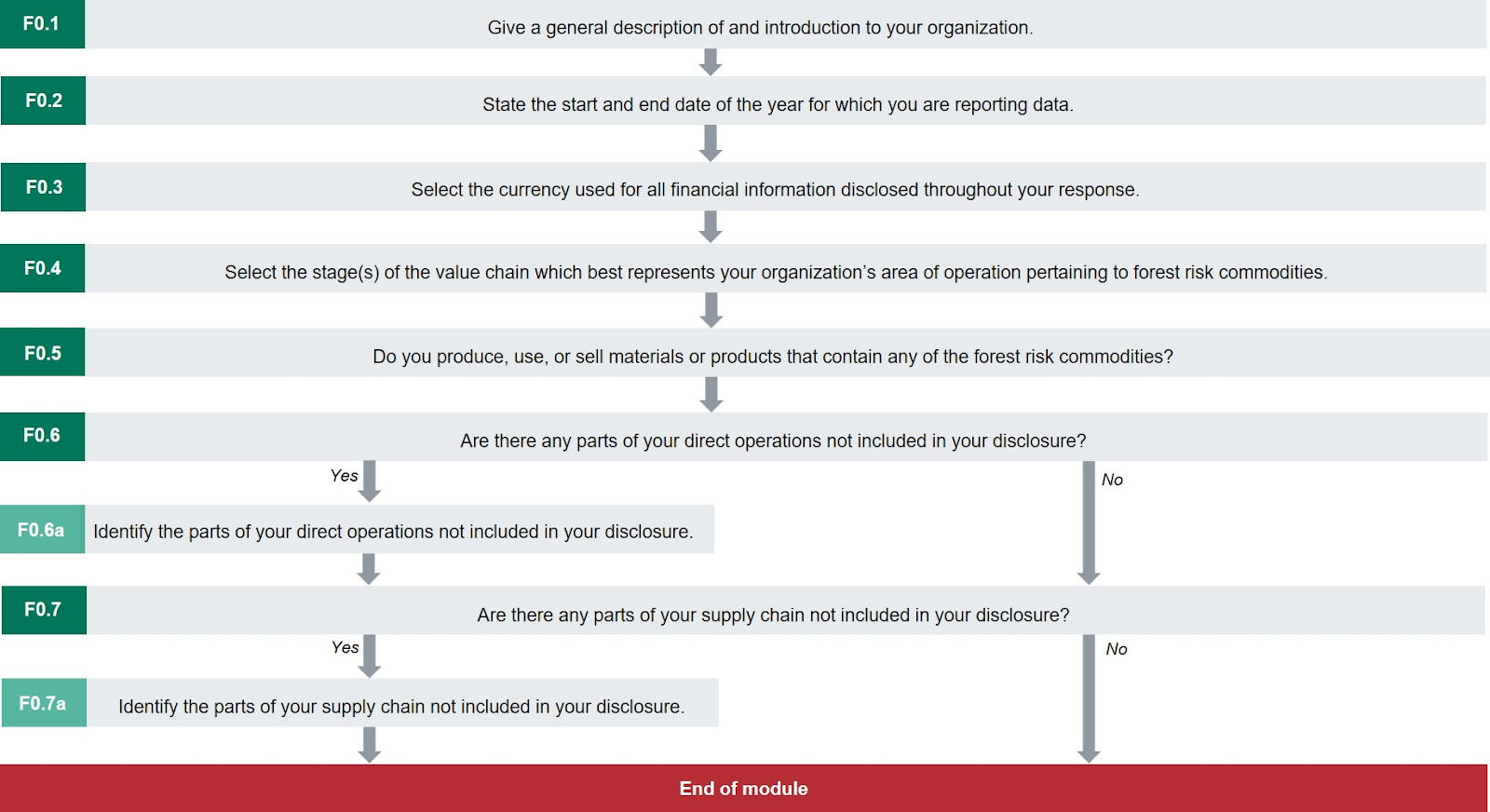
Forests Questionnaire
Benefits of Adopting the CDP Reporting Framework
Risk Management
By disclosing data on climate-related risks and opportunities, companies can predict, prepare, and mitigate potential operational harm.
Regulatory Compliance and Strategic Alignment
With CDP reporting, companies can align with global environmental agreements and regulations, like the Paris Agreement. This ensures that companies can adapt to future regulatory changes and contribute to global climate goals.
Investor Confidence
During investment decisions, investors consider environmental, social, and governance (ESG) concerns. Financial institutions make use of CDP data to assess the environmental portfolio of companies.
Enhanced Transparency and Accountability
By adopting the CDP reporting framework, companies showcase their commitment to environmental sustainability. This helps in building transparency with stakeholders like consumers, investors, and regulators.
Carbon Disclosure Project Climate Change Questionnaire
The CDP Climate Change Questionnaire is a broad tool focused on helping entities measure, manage, and report their greenhouse gas emissions and other climate-related data. It is a part of CDP’s comprehensive strategy to encourage transparency and accountability in corporate environmental practices.
It covers a wide range of topics related to climate change and corporate sustainability. The questionnaire is updated annually to align with the latest scientific and regulatory advancements, ensuring that it stays relevant.
Sections and Key Questions Covered in the Questionnaire
Governance
This section focuses on how the company’s governance structure manages or addresses issues related to climate change. Some key questions covered in this section include how the board monitors climate risks and opportunities, the management's responsibilities in climate strategy, and how climate performance is reflected in compensation policies.
Risks and Opportunities
In this part, organizations are asked to assess themselves and identify the risks and opportunities associated with climate change. This involves physical risks (e.g., extreme weather events), transitional risks (e.g., regulatory changes), and opportunities (e.g., new markets for low-carbon products). Questions address various periods, potential financial outcomes, and methods to minimize risks while maximizing opportunities.
Strategy
This section talks about how climate-related concerns can be integrated into the company’s business strategies. Key questions cover the short, medium, and long-term strategies for managing climate-related impacts, and how these strategies influence financial planning.
Targets and Performance
Businesses disclose their emission reduction targets, provide progress updates, and share performance data. This involves answering detailed questions about their direct, indirect, and supply chain emissions, as well as their energy consumption and renewable energy utilization.
Metrics and Targets
This section requires organizations to disclose the metrics they use to evaluate climate-related risks and opportunities. They should also provide details about their emission reduction targets and performance against these targets.
Emissions Data
Detailed questions on greenhouse gas emissions are included in this section. Companies need to report their direct (Scope 1), indirect (Scope 2), and other indirect (Scope 3) emissions. This also includes covering the emissions' calculation methods and third-party verifications.
Other Sections
Some other sections include energy, additional metrics, verification, carbon pricing, engagement, and biodiversity.
Using the CDP Climate Change Questionnaire
Data Collection and Measurement
Companies start by collecting and measuring extensive data on their greenhouse gas (GHG) emissions, energy usage, and other environmental metrics. Data is collected from various sources like operational tasks, supply chains, and product life spans. With the use of established methods like the Greenhouse Gas Protocol, they evaluate their direct and indirect emissions.
Internal audits and third-party verifications are crucial to secure data accuracy. This improves data reliability and also increases stakeholder trust in the information provided.
Completing the Questionnaire
When completing the CDP Climate Change Questionnaire, organizations must provide detailed information in multiple sections, including governance, risks and opportunities, strategy, targets and performance, and emissions data. Businesses are expected to share both numbers and stories to show the full scope of their climate efforts and effects.
Organizations identify and report on climate-related concerns (physical, regulatory, market) and opportunities (new markets, efficiency improvements).
Analyzing and Utilizing the Data
The standardized format of the CDP questionnaire lets organizations compare their performance with industry peers, helping them pinpoint best practices and areas for improvement. Many insights are gained from the questionnaire that helps in identifying climate-related concerns and integrating them into business strategies, setting more ambitious targets, and developing initiatives to reduce their environmental impact.
Reporting and Communication
Stakeholders, including customers, vendors, investors, and regulators, have access to the information shared in the CDP questionnaire. Being transparent in reporting establishes trust, showcasing the company’s commitment to sustainability. Investors, specifically, use the data gained from CDP to make investment decisions.
Continuous Improvement
Continuous engagement with CDP provides feedback for ongoing improvement and fosters a culture of transparency. Companies leverage the data and insights from CDP reports to implement the most efficient practices in sustainability. This involves adopting new technologies, enhancing operational efficiencies, and improving supply chain sustainability.
Carbon Disclosure Project Scoring and Rankings
The Carbon Disclosure Project (CDP) assesses and ranks organizations based on their environmental transparency and performance. These rankings are crucial for companies to showcase their sustainability efforts and appeal to eco-friendly investors.
Scoring Process for Carbon Disclosure Project
CDP Scoring works based on the company’s responses to the questionnaires that take place annually. A team of experts work together to determine the quality and completeness of the data provided, making it a diligent process. Companies are scored based on several aspects of sustainability, including climate change, water security, and forest management, each with their own disclosures.
Score Levels
- A: Leadership level, showcasing best practice.
- B: Management level, showing that the company is taking coordinated action on climate issues.
- C: Awareness level, indicating that the company understands its climate risks and impacts.
- D: Disclosure level, showing the company is beginning to disclose its climate impacts.
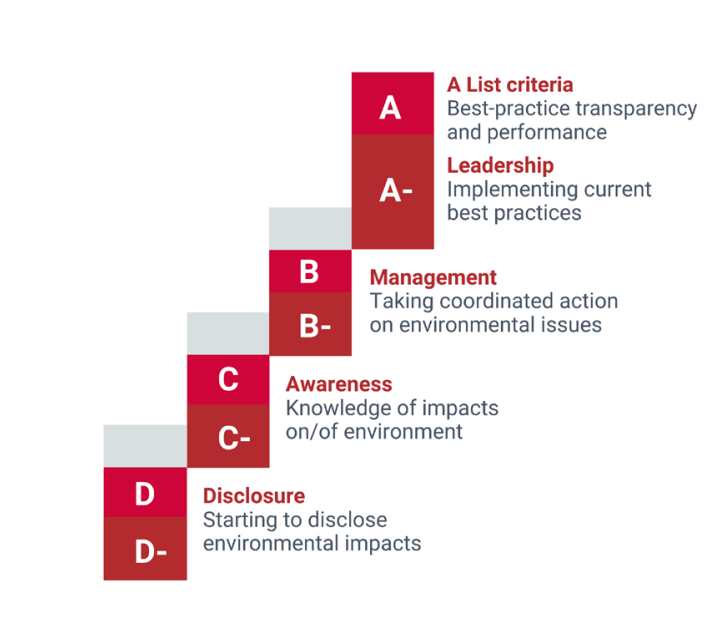
CDP Scoring System
Evaluation and Scoring Criteria for Carbon Disclosure Project
Disclosure
This is the base level wherein companies report on their environmental, social, and governance structures. It ensures the accuracy and completeness of the data provided.
Awareness
CDP evaluates whether the company has identified environmental concerns impacting its operations, including risks and opportunities related to climate change.
Management
At this level, the efforts put forward by the company to address these environmental issues are accessed. This includes the implementation of policies, strategies, and processes to manage and reduce environmental impact.
Leadership
At the highest level of scoring, CDP acknowledges organizations that showcase best efforts in environmental sustainability and innovation. This highlights companies and their forward-thinking leadership.
Carbon Disclosure Project Impact on Corporate Reputations and Investments
Companies with high CDP scores gain a competitive edge in the market, recognized as industry leaders in sustainability. This could lead to fresh business prospects, alliances, and markets that value sustainable practices.
Companies with high scores are also in a better position to meet both current and future environmental regulations. They can also better adapt to market shifts that lean towards sustainable-based models.
Integration of CDP Data into Business Strategies
Carbon Disclosure Project (CDP) data is crucial for companies as they can gain valuable insights into their energy usage, waste management, and emissions. This information can help pinpoint areas where they can improve efficiency and reduce energy consumption and waste. This can result in cost savings and make operations run smoother.
Organizations can also benefit from CDP data while setting up ambitious science-based targets tor minimizing greenhouse gas emissions and enhancing overall sustainability. By monitoring their progress within CDP's framework, companies can make sure they stay on track to meet their goals, changing their strategies whenever necessary.
Examples of Successful Integration
Adidas
With the help of CDP data, Adidas has managed to set up ambitious science-based targets wherein they aim to reduce GHG emissions by 30% by 2030 from a 2017 baseline. They have also produced millions of shoes using Parley Ocean Plastic, which is made from upcycled plastic waste collected from beaches and coastal communities.
With the help of CDP data, Adidas tracks and reports its progress transparently. In 2023, Adidas received an A- score in the CDP Climate Change assessment, highlighting its leadership in environmental transparency and action. For water security, Adidas aims to reduce water consumption by 20% per employee in its own operations by 2025.
Unilever
In 2020, Unilever received a triple ‘A’ score from CDP for their efficient practices in reducing climate issues, protecting forests, and enhancing water sustainability. Out of more than 8,000 companies that disclosed their climate impacts to CDP in 2019, Unilever was among the 179 companies, the 2% that achieved an ‘A’ rating.
This inclusion of Unilever on the CDP A list showcases the successful integration of science-based targets, renewable energy sources, and climate scenario assessment. These actions have placed the company favorably in terms of corporate reputation.
Microsoft
As a part of their commitment to being carbon-negative by 2030, Microsoft has been transparent about their carbon footprint, reporting annually to CDP. They have made some significant renewable energy investments, including investing in over 23.6 million megawatt-hours (MWh) of renewable energy in 2023.
Not just that, as part of their water security program, they have contracted over 61.7 million cubic meters of water replenishment benefits. They have surpassed their land protection target by more than 40%, protecting 15,849 total acres of land. This has been possible through the integration of CDP data into its larger sustainability strategy to achieve carbon neutrality.
Conclusion
The Carbon Disclosure Project (CDP) is a crucial element in promoting corporate transparency and action on environmental issues. Achieving high scores in CDP evaluation demonstrates a company’s leadership and commitment to sustainability, which in turn enhances their reputation, attracts investors, and drives operational efficiencies.
As more and more entities continue to engage with CDP and aim for better ratings, we can look forward to progress towards worldwide environmental objectives and a more robust, sustainable economy.