What is Prospective LCA?
Prospective LCA Definition and Overview
Comparative Life Cycle Assessment (LCA) is used in the evaluation of the probable effects of existing and planned products, technologies, or systems. The prospective LCA differs from the traditional LCA since it mainly considers the future environmental impacts resulting from new technology, future regulations, and markets. Its purpose is to consider how the environmental factors may be altered in the future to assist businesses in sustaining eventually. For instance, instead of evaluating the effects of the current manufacturing process, a future LCA might explore how sources of energy like hydrogen, or future mobility architectures will impact a product’s carbon footprint in 2035. It also assists in the designing of products for future compliance, innovations, and minimum detrimental impact on the environment.
Why is Prospective LCA Important?
Prospective LCA is valuable because it lets companies work out future environmental impacts and adjust their activity in accordance with future environmental legislation. In a world transitioning towards decarbonization and resource scarcity, it also prepares organizations to make decisions in the present that remain profitable in the future. For instance, automotive manufacturers may want to know if EVs will continue to be sustainable should there be improvements in batteries or changes in energy from the grid. In the same way, those in the fashion or packaging industries can seek knowledge on when such items would be biodegradable and redesign the product with this in mind. Due to its capacity to consider potential future situations, prospective LCA also encourages innovation and acts as a risk mitigation tool by estimating future environmental effects. Companies may be able to respond in advance to new legislation, for instance, concerning carbon costs or its rules on extended producer responsibility regulations. This is not only beneficial to minimize the risks of non-compliance but also beneficial to their competitive advantage since it adheres to the consumers’ shift towards more sustainable products.
Key Components of a Prospective LCA
Defining System Boundaries in Prospective LCA
The system boundaries of prospective LCA also need to capture new technologies, changes in consumer demand, and new laws. These boundaries determine what is in or out of the evaluation, for instance, whether to factor in future energy offers, new types of material, or superior recycling procedures. Because of the broader focus, potential LCA frequently considers models beyond the conventional straight product life-cycle and into circularity, where materials are cycled through for multiple uses, remanufacture, or recycling. This makes it easier to assess the effectiveness of new policies such as circularity obligations or no disposal or emissions targets. Companies also need to examine and establish their geographical focus very strategically. For instance, the sustainability of a product might vary depending on the following prediction that the regulations in Europe will become stricter in the future compared to the rest of the world.
Modeling Future Scenarios for Prospective LCA
One of the key concepts of prospective LCA is future scenario modeling since it gives an idea of what kind of trajectory the product or system under consideration might be following. Companies have to design numerous possibilities due to risk factors – the shifts in energy sources, availability of materials, or changes in logistics means. An example of scenario modeling is assessing the feasibility of motor vehicles with solar panels taking into consideration different predictions on the improvement in efficiency of the solar panels and the development of batteries. Another example might focus on the transition to bioplastics and then examine the net gains to the environment over conventional fossil-derived plastics. Scenario assumptions typically focus on:
- Future energy grids: Will renewable energy sources prevail in the next ten to twenty years, and what will happen to manufacturing emissions?
- Technology shifts: What do new technologies like 3D printing or automation mean for material consumption and energy demand?
- Supply chain evolution: Are global supply chains likely to be shortened to reduce transportation emissions?
In this way, various futures are simulated to develop strategies that allow companies to be prepared for change and develop sustainable solutions.
How Prospective LCA Supports Sustainable Innovation
Guiding Sustainable Product Development
Prospective LCA helps companies design products with lower environmental impacts by aligning sustainability goals with expected industry changes. Forecasting environmental impacts under future conditions allows businesses to select materials, processes, and technologies that will remain sustainable over time. For example, a company planning to release electric vehicles (EVs) can use prospective LCA to predict how battery innovations or future renewable energy sources will impact the vehicle's overall emissions. With this foresight, they can make design choices to meet current and future carbon neutrality goals. Similarly, in fashion, brands can explore alternative fibers like lab-grown textiles and predict how these materials will perform as regulations on synthetic fabrics tighten. This forward-thinking approach also encourages product innovations that reduce environmental footprints, such as shifting to modular designs for electronics, which can be easily upgraded rather than discarded. Companies can optimize their supply chains and avoid future resource scarcity by planning for sustainable raw materials now.
Informing Policy and Regulatory Planning
Prospective LCA is important for policymakers because it facilitates anticipation of future environmental trends as well as their effects on the country’s economy. The findings of prospective LCAs can help governments develop regulations that go to the root of current and future sustainability concerns. For instance, the Europe Union’s Circular Economy Action Plan sets resource efficiency and product durability as core objectives, which are consistent with observations made with the help of prospective LCAs. It also enables the regulators to gauge the rough effect of new policies like carbon pricing or recycling standards and align them in a manner that shall create easy receptiveness in industries. For example, the potential future LCAs could show that tighter output standards on heavy industries could promote the development of clean technologies such as green hydrogen. It is primarily beneficial when governments and organizations can use the prospective LCA results when establishing guidelines for new industries, such as biodegradable packaging products or green energy solutions, where sustainability and advancement will be woven together.
Steps to Conduct a Prospective LCA
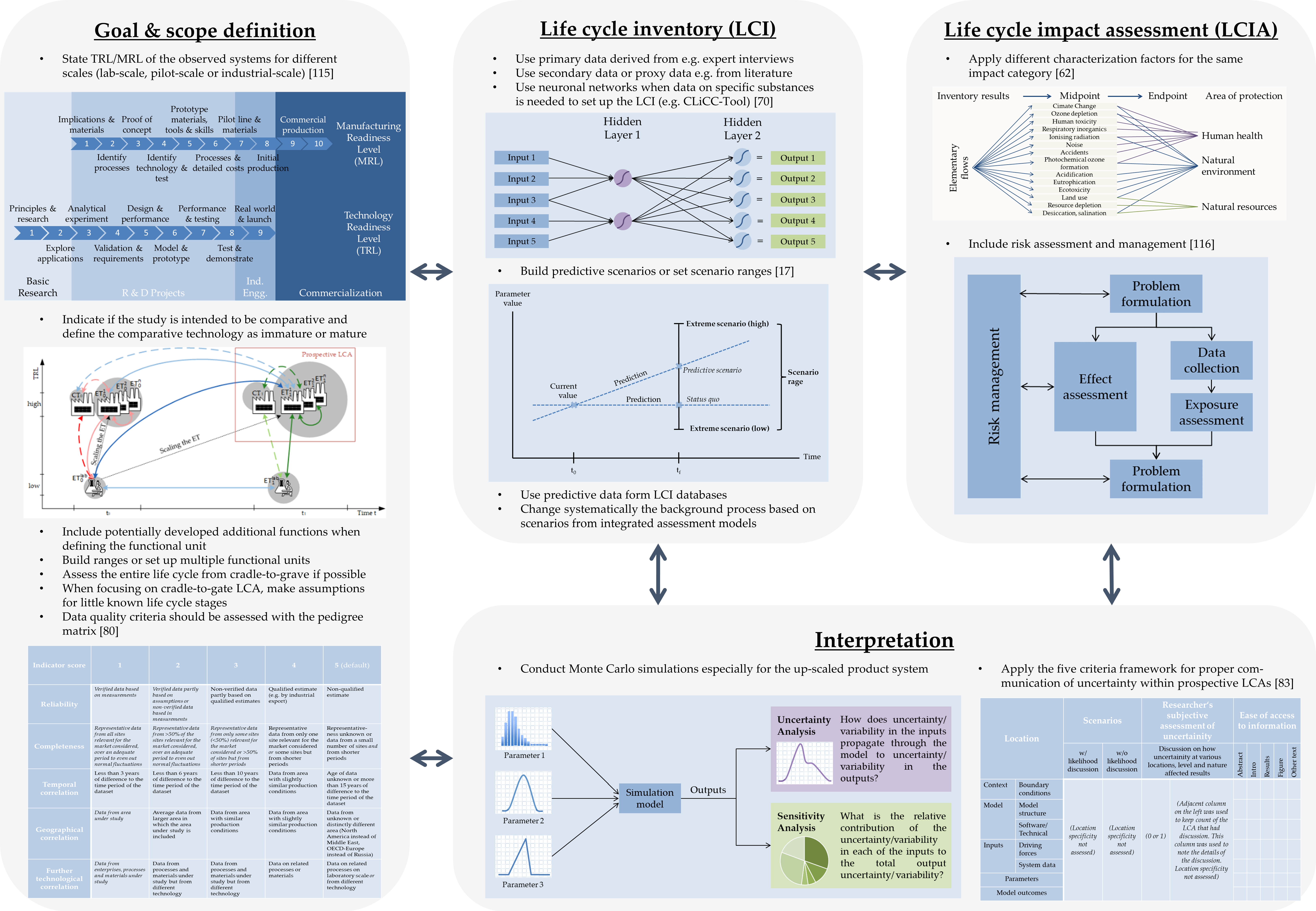
Source: MDPI
Step 1: Define the Goal and Scope
When undertaking a prospective LCA, one of the initial processes is setting goals. Companies or policymakers need to identify specific future-oriented questions, such as:
- What will be the environmental effects of replacing fossil fuels with biofuels in the next ten years?
- In what measure do the regulations of 2035 impact the life cycle emissions of the packaging products?
It is also important to define the scope. This includes defining what phases of the life cycle (e.g., raw material extraction, production, etc.) to embrace and how to define time horizons and regions for high relevance.
Step 2: Develop Future Scenarios
The key emphasis of the prospective LCA is the procedure of constructing reasonably convincing future narratives. Scenarios should incorporate:
- Technological innovations: Rethinking energy storage solutions for the new reality of a grid-based only on renewable sources.
- Policy changes: To what extent does the implementation of tough emission standards affect manufacturing?
- Resource availability: What if some of these raw materials become scarce, or rather expensive to acquire?
These scenarios have probabilities that have to be adjusted in the light of uncertainties, say changes in market forces or political events. For example, firms may choose to run more than one carbon tax rate to analyze the effects on cost and output. This flexibility enables business to change when real events happen to differ from the assumed events.
Step 3: Perform Inventory Analysis and Impact Assessment
Most of the time, when it comes to analysis in prospective LCA, the information collected must be done with the help of projection data. Often, businesses are required to make some estimations on how inputs and outputs are going to vary. That is, what would the emission from hydrogen fuel production output look like in 2040 with enhanced technology? Sometimes this step may involve seeking the assistance of a specialist in the given industry or employing models worked out by environmental bodies. After that comes impact assessment, or determining the consequences of the impact of each scenario on the environment. Some examples of what companies can optimize are carbon footprint and water usage for various product life cycle stages, or pollution levels for various product life cycles.
Step 4: Interpretation of Results
The last activity could involve explaining the results from the scenarios analyzed, to draw some conclusions on the decisions that could be made. Organizations can apply them to make efficient decisions on which sustainable innovations to drive and which risks to avoid. For instance, given the fact that this or that scenario identifies the increase in efficiency of aluminum recycling in the following decade, companies start utilizing recycled aluminum for future products. Another way policymakers can benefit from the results is to make better policies aimed at the protection of the environment. For instance, prospective LCA might show that motivational measures for solar energy use will be more effective for emissions reductions than for wind energy. The results obtained offer practical foundations for generating good strategies that would enhance sustainability at the company and policy stages.
Challenges in Implementing Prospective LCA
Uncertainty in Future Predictions
It is always complex to forecast technological and economic trends, as well as environmental factors. When it comes to prospective LCA, the main issue arises of how to predict future impacts such as technology improvements or altered policies. One of the challenges of using these assessments is that a product that appears socially responsible today, may not actually meet the environmental requirements of tomorrow. Managing uncertainty requires strategies like:
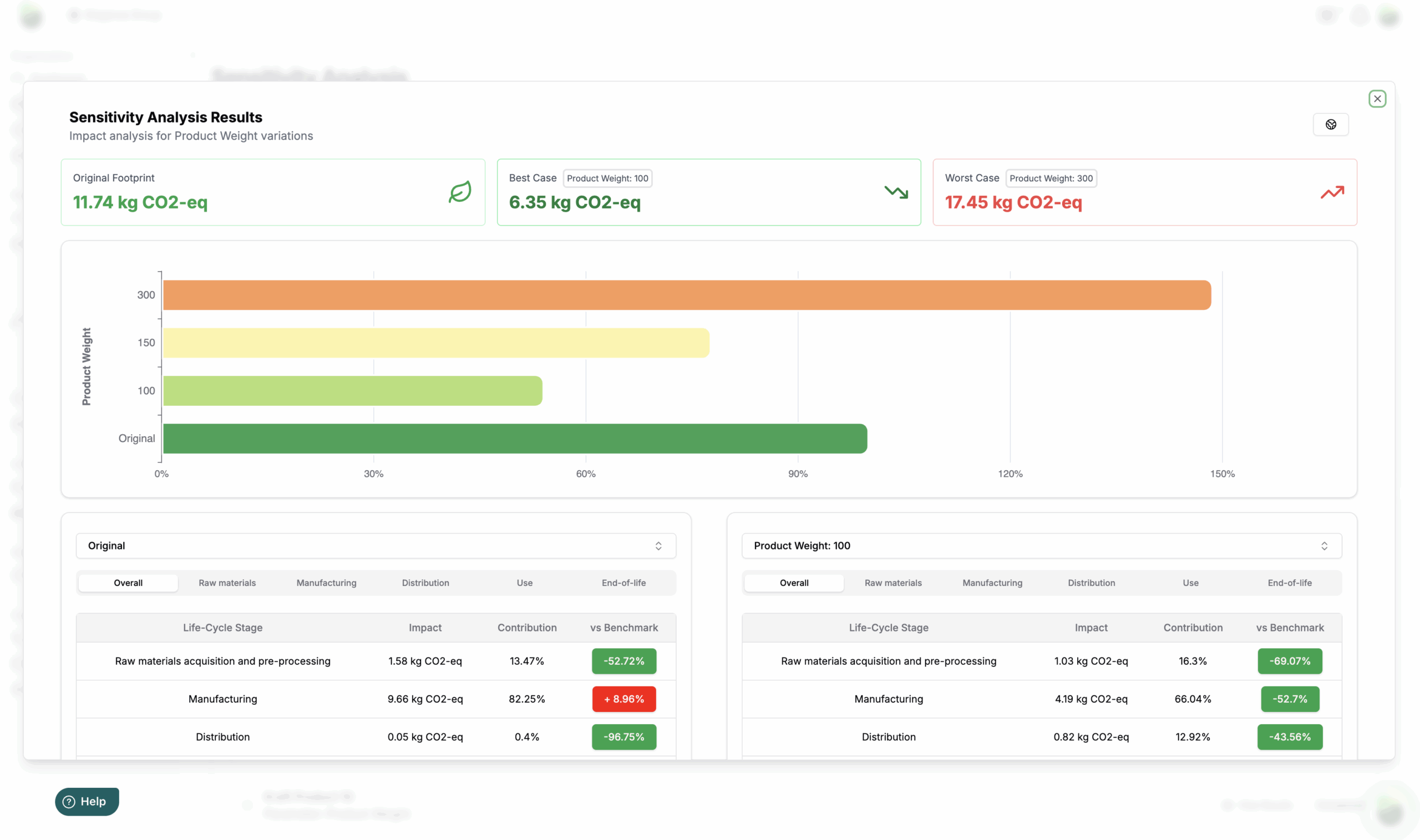
- Sensitivity analysis: It involves determining the response of one variable to changes in another (such as energy prices or carbon emissions).
- Multiple scenario modeling: Developing several ‘future frames’ is appropriate because it makes it possible to be ready for different futures. For instance, it may be possible to run hypothetical cases that incorporate both high and low rates of transition to renewable energy.
These tools help business managers stay adaptive when making decisions, knowing that they cannot always accurately forecast circumstances.
Data Availability and Quality
Prospective LCA models that need to be built depend on accurate data about the future, which may not be always possible. Compared to the conventional LCA that employs historical records, prospective LCA incorporates estimates, which can cause bias or inaccuracies. For instance, forecasting energy grid compositions that may exist in 2050 is almost impossible because of the change in policies, technology, or market preference. To address this, companies must:
- Rely on credible references including scientific publications, government papers, and industry trends.
- Check the assumptions with other work specialists and fellow experts to make sure that they are sound enough.
- Use real-time monitoring tools where possible, to refine the assumptions over time as the trends emerge.
Applications of Prospective LCA in Industry
Prospective LCA in Manufacturing
Manufacturers can use prospective LCA to enhance the sustainability of production processes, materials, and technology investments. For example, a textile company might assess how switching to plant-based dyes today will reduce future environmental impact if regulations tighten around chemical dyes. By evaluating future shifts in material availability and recycling technologies, manufacturers can future-proof their operations and minimize risks. Case Study Example: The automotive industry applies prospective LCA to analyze the environmental impact of new technologies such as lightweight composite materials or electric vehicle batteries. One study showed how EV batteries could become more sustainable if powered by renewable energy grids by 2040, encouraging automakers to prioritize battery development today.
Prospective LCA in Energy Transition
This transition to more sustainable energy sources including solar power, wind power, and hydrogen also has environmental implications. Prospective LCA allocates the environmental burdens associated with these technologies throughout their life cycles. For instance, solar panels have environmental impacts, but their worth will increase as manufacturers design them to be recycled with fewer rare minerals over time. By using prospective LCA, energy companies can:
- Compare strategies of energy transition (e.g. solar vs wind vs hydrogen).
- Identify opportunity cost risks for supply chains involved in critical minerals, which include lithium and cobalt.
- Invest according to state regulation forecasts, such as even more rigorous carbon emissions standards by 2050.
For example, renewable energy firms can avail of grid enhancements by forecasting how lifecycle storage requirements would impact emissions.
Future Trends in Prospective LCA
The Growing Role of AI and Big Data
Artificial intelligence (AI) and big data are transforming prospective LCA by making environmental forecasting more accurate and dynamic. These technologies enable companies to:
- Process large datasets faster, such as global energy trends or emissions data across supply chains.
- Automate future scenario modeling, reducing human error and bias.
- Use machine learning algorithms to predict long-term environmental impacts more effectively by analyzing historical patterns and future projections.
For example, companies can predict how electric vehicle batteries will perform under different energy grid compositions by 2050, using AI-driven models that continuously refine assumptions with real-time updates. This allows for more data-informed decisions as sustainability policies and market dynamics shift over time. AI tools can also detect environmental hotspots quickly, offering companies better visibility into which design choices will have the greatest future impact.
Expanding Use of Prospective LCA in Global Sustainability Goals
Currently, governments and businesses use prospective LCA to conform with international standards, such as the United Nations Sustainable Development Goals (UN SDGs).
The forward-looking nature of prospective LCA helps:
- Examine potential sustainable trade-offs in selected sustainability ventures. For instance, adopting solar energy means lowering of emissions only to replace it with extraction of resources for solar panels.
- Influence policy decision-making by forecasting how the legislation would affect future supply chains and assist governments in creating better sustainability standards.
- Present a guide on how to achieve current net-zero targets while incorporating future environmental factors into present decision-making.
Another potential benefit of prospective LCA is that integrated organizations can safeguard their plans from future regulatory changes, such as carbon taxes or resource constraints. For example, companies planning to transition to circular economies can use this framework to assess the advantages of recycling technologies expected to develop by 2040.
Conclusion
Prospective LCA takes a forward-looking approach, evaluating potential environmental impacts based on future scenarios, technological trends, and policy changes. Unlike traditional LCA, it helps businesses anticipate challenges and opportunities that may arise in a rapidly evolving landscape. This makes it crucial for sustainable innovation as companies design products that align with emerging industry shifts and environmental standards. With the integration of AI and big data, prospective LCA offers more accurate predictions by modeling different future scenarios. It is becoming a powerful tool in industries like renewable energy and electric vehicles, where anticipating long-term environmental impacts is essential. Governments also benefit from prospective LCA, using it to shape climate policies and align with global goals like the UN’s Sustainable Development Goals (SDGs). By adopting prospective LCA, businesses and policymakers can take proactive steps toward reducing future environmental risks and fostering sustainable growth. It ensures companies remain competitive while helping society meet long-term ecological goals. Now is the time to leverage this tool for innovative decision-making that benefits both the environment and future generations.